What We Do At Asmed
At ASMED in Istanbul, hair transplantation begins with an individual assessment of your hair loss, hair characteristics, donor capacity and expectations. Dr. Koray Erdoğan plans treatment with attention to the appearance you want to achieve and the donor hair that may be needed in the future. The stages below explain your visit, from consultation and hairline design to graft extraction, placement and postoperative care.
To request a preliminary assessment, complete our online consultation form.
Learn how ASMED’s approach to hair transplantation connects hairline design, donor preservation and surgical planning.
Welcome
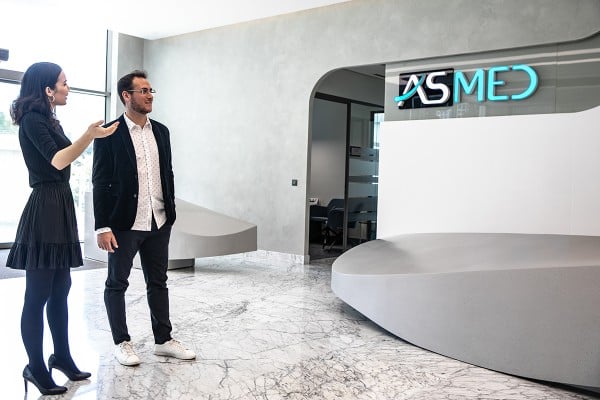
On the first day, the reception staff greets you prior to meeting with your assigned advisor. Preceding your consultation, high-resolution photos are taken in our photography room, a room especially designed with special equipment strictly for this purpose.
Consultation
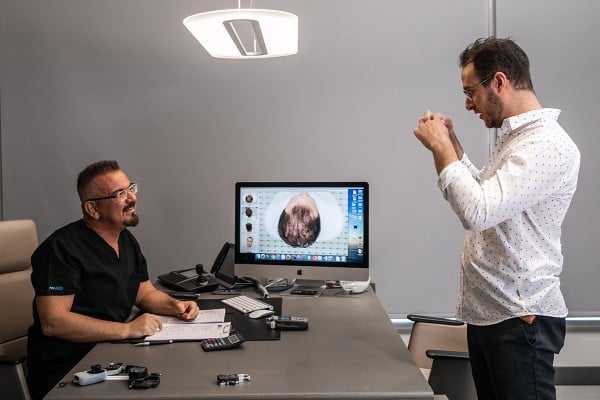
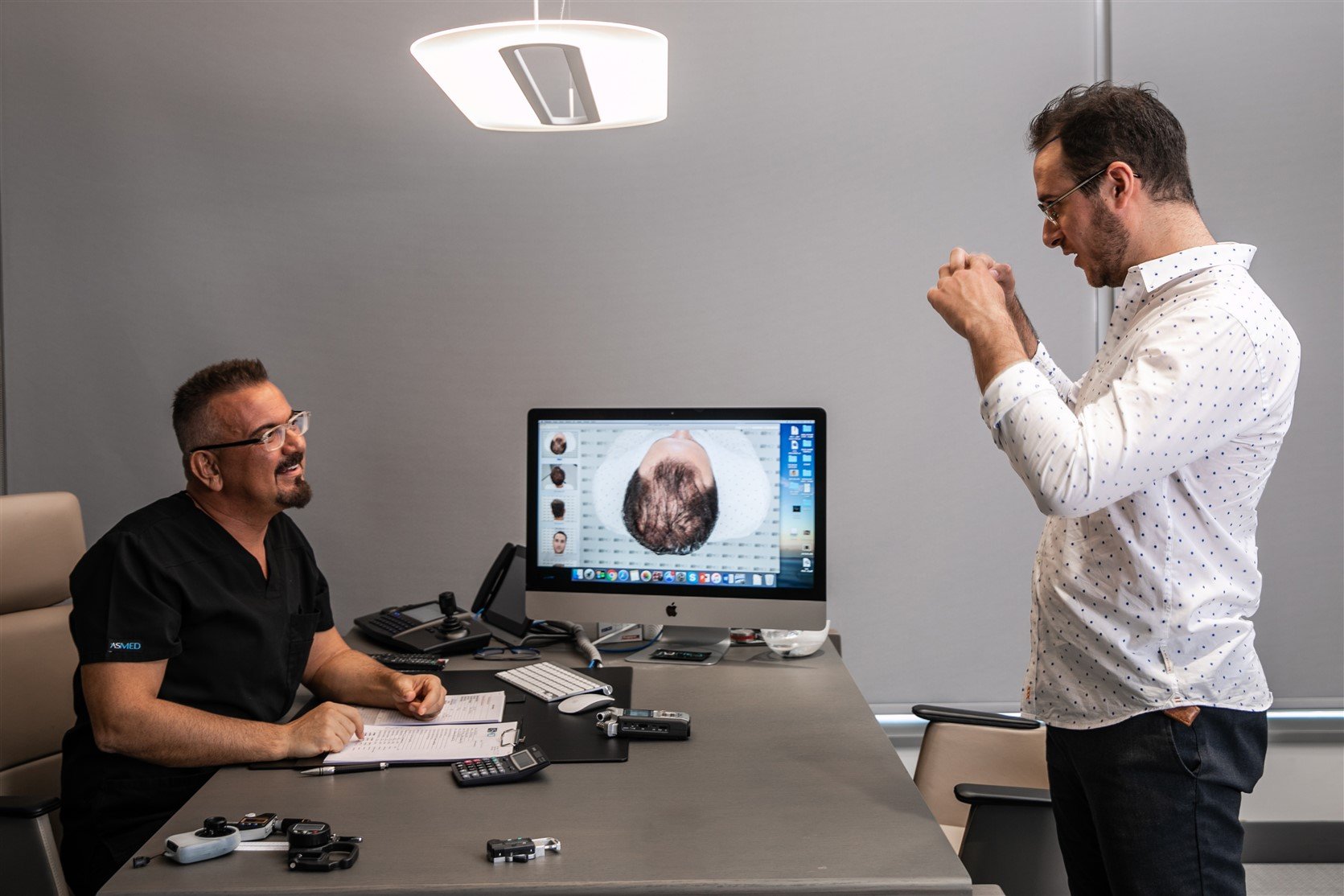
The consultation and examination are crucial to the evaluation of your case. During your consultation, you will have an adequate opportunity to have your questions satisfactorily answered. Your consultation consists of an evaluation by the doctor, taking into account all of your goals and desires, your family’s history of alopecia , your age and medical history, as well as your facial features and hair characteristics. At Asmed, we believe that every patient must be fully informed of the pros and cons of surgery. It is for this reason that the doctor examines each patient carefully and identifies non-candidates and non-ideal candidates. During the examination, the scalp and hair are studied under high power magnification with a hand-held microscope that makes miniaturization and hair abnormalities easier to see. the hair density and the follicular density are calculated. hair diameter is measured with a micrometer donor and recipient areas are measured. donor capacity is calculated. According to your hair type, hair loss, ethnic background, gender and expectations, the doctor will share the surgical results of another patient whose characteristics are similar to yours. You will also be informed about any medication that is deemed necessary for complete treatment of your condition. A decision regarding the use of medication can affect surgical planning in a number of ways.
Tests and Analysis
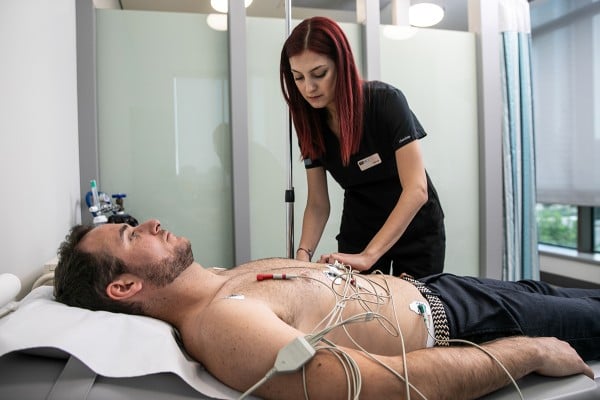
Your blood will be taken for analysis followed by the performance of an electrocardiogram. The anesthesiologist will subsequently consult with you and review your test results. According to your preferences and your situation, he will plan your program.
Hairline
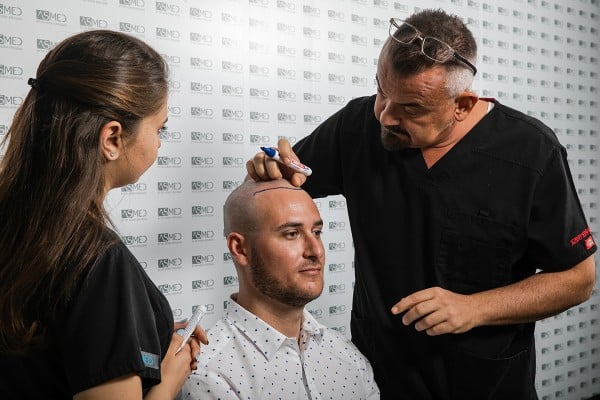
Preparation depends on the technique selected for your procedure. For shaved FUE, the hair is trimmed to approximately 1–2 mm. For suitable patients, Long Hair FUE retains the hair length during both extraction and implantation. The choice is discussed during your assessment. The details of the donor area are documented in a digital image and are used by the technician to perform measurements in a computer program. The hair density, the follicular density and the number of hairs per follicular group (a calculated density) are evaluated for different scalp regions. The design and location of the hairline is determined through an extensive consultative process. Since every person has a unique bone and facial structure, the purpose of this step is to create a unique hairline that will be exclusive to you. At this point, the doctor will identify your goals and expectations, and will evaluate the all-inclusive 3-dimensional qualities of your head and face. Then he will balance them with considerations such as donor hair availability, potential future hair loss and the suitability of a particular style for your facial features. A pen that is used exclusively for you, is utilized to draw your frontline design. After receiving your approval, the hairline is established and stabilized. A final series of photos is taken from different views. Following all these procedures, you will be invited to return to your hotel for a rest.
Pre-Surgical Meeting
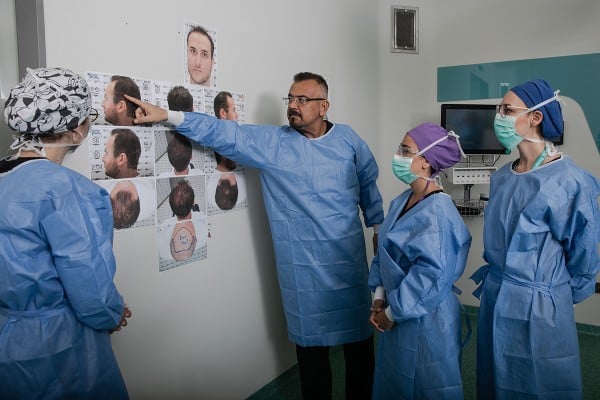
At the end of the day, the Asmed staff normally meets in the meeting room to review all pertinent patient information and to make plans for surgery the following day.
The Day of Surgery
Your day begins with a greeting by the reception staff and your advisor. You are then escorted to the surgery suite and are prepared for surgery. Before surgery you are invited to the recreation room. The anesthesiologist visits you, and according to your situation and desires, he makes changes to your pain management plan. You are able to pick out movies that you may wish to watch during the day. Asmed also offers major TV channels and Internet options. During surgery, it is possible to take a break for the restroom and to have snacks or stretch.
Operating Room Supplies and Preparation
In the surgical rooms, only sterilized or disposable instruments are used. In concurrence with the decisions reached during the pre-surgical meeting, the room is prepared along with the instruments that will be used during your particular surgery.
The Surgery
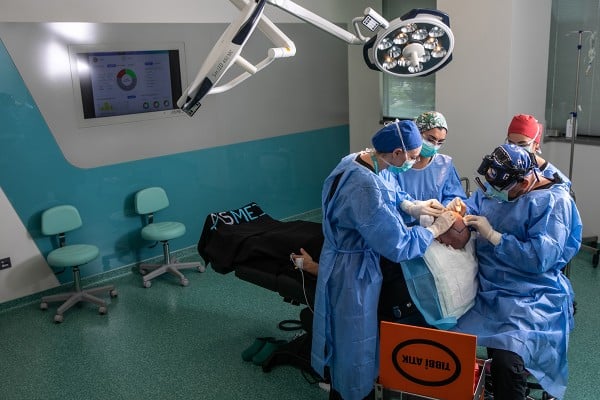
You change into a surgical gown and sit in a chair designed for hair transplantation, covered with disposable material for surgical use. Before surgery begins, the doctor reviews your file and checklist, examines your donor area, and marks the areas to be used according to the treatment plan.
Local Anesthesia
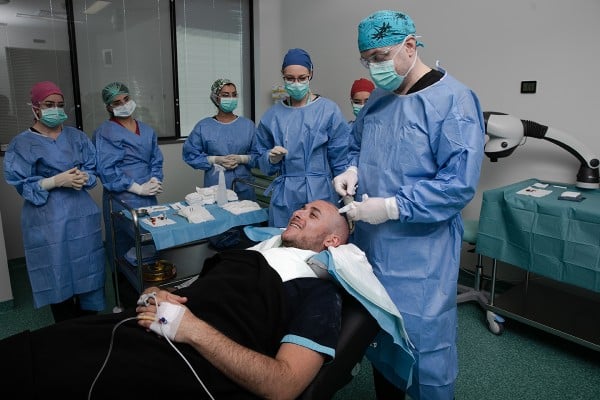
Local anesthesia is performed by a specialist anesthesiologist. Throughout the procedure, the anesthesiologist monitors the patient’s vital signs using a wireless monitoring system.
Extraction
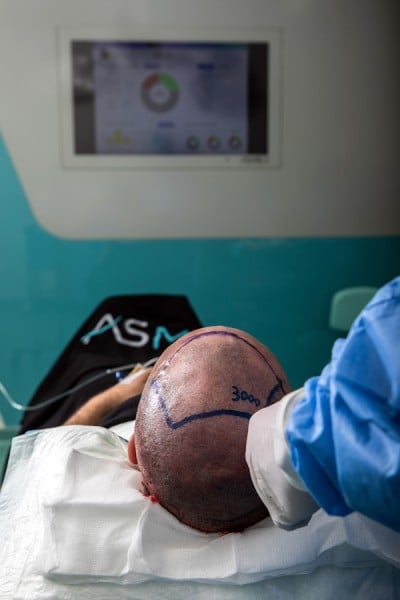
Grafts are extracted while you are seated, allowing access to different parts of the donor area. ASMED uses a manual punch and its sequential extraction technique, also known as DES. Punch type, size, and depth are selected according to your individual characteristics. Extraction is planned with attention to donor capacity, the distribution of the remaining hair, and graft preservation. The aim is to obtain the grafts needed for the treatment while preserving the appearance and future usable capacity of the donor area. During extraction, graft observations are recorded and reported to help assess quality and guide adjustments. After extraction, antibiotic ointment is applied to the donor area.
Graft
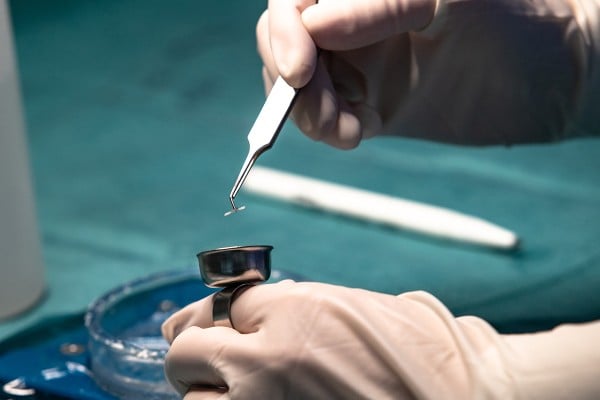
The parameters that potentially damage the viability of grafts are carefully controlled by the latest technological improvements (Mantis Microscope). Grafts are assessed with a magnification device from the commencement of surgery. They are then selectively separated, put into Petri dishes that contain Custodiol, and placed over an electric chilling device during extraction.
Incisions
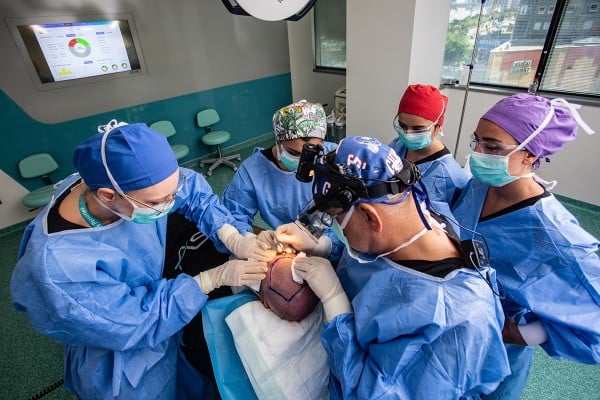
Recipient sites are the small incisions where the hair grafts will be placed. Dr. Koray Erdoğan personally creates these sites. He plans their angle, direction, and distribution with attention to the natural growth direction of your hair and the intended pattern of coverage. The recipient area is anesthetized before the incisions are made. Custom-sized blades are selected to suit the grafts, and the depth of the incisions is controlled. ASMED uses the lateral slit technique, and the sites are created under loupe magnification.
Recipient
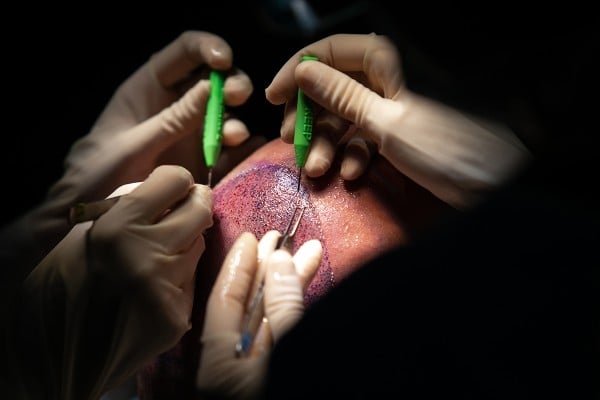
The grafts are placed into the recipient sites created by Dr. Koray Erdoğan, following the angle and direction of each incision. Grafts are selected for different areas according to the treatment plan. Single-hair follicular units are used at the frontal hairline to help create a soft, natural appearance. Grafts are kept moist until placement. A ring storage device provides a temporary holding place, and the K.E.E.P. (Koray Erdogan Embedding Placer) is used for insertion. Graft placement is monitored during the procedure and checked again at the end.
Completion
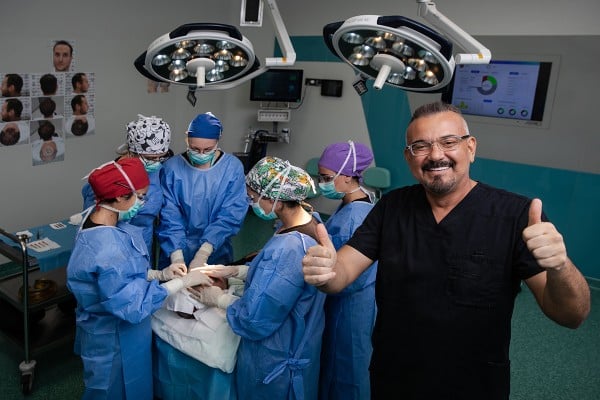
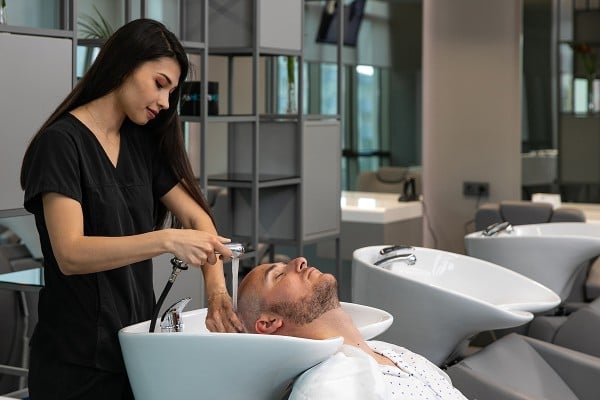
The surgical areas are cleaned thoroughly. Low-level laser therapy (LLLT) may be used after surgery if advised. The doctor then examines the recipient area and checks the position and placement of the grafts. Upon completion of the surgery, the staff provides you with post-operative instructions. An after-care kit containing post-operative medications assigned by anaesthesiologists, a neck pillow, and ice jel is provided for you as well. After completion of these steps, you are ready to leave the clinic wearing a cap that was specially prepared for this surgery. The next day, you will return to the surgical centre for a hair wash and check-up. After you return home, your patient coordinator follows your recovery and progress for 12–15 months. Clinical questions or concerns are referred to the doctors for assessment.